
MCA Reconciliation Clauses: What Businesses Should Review
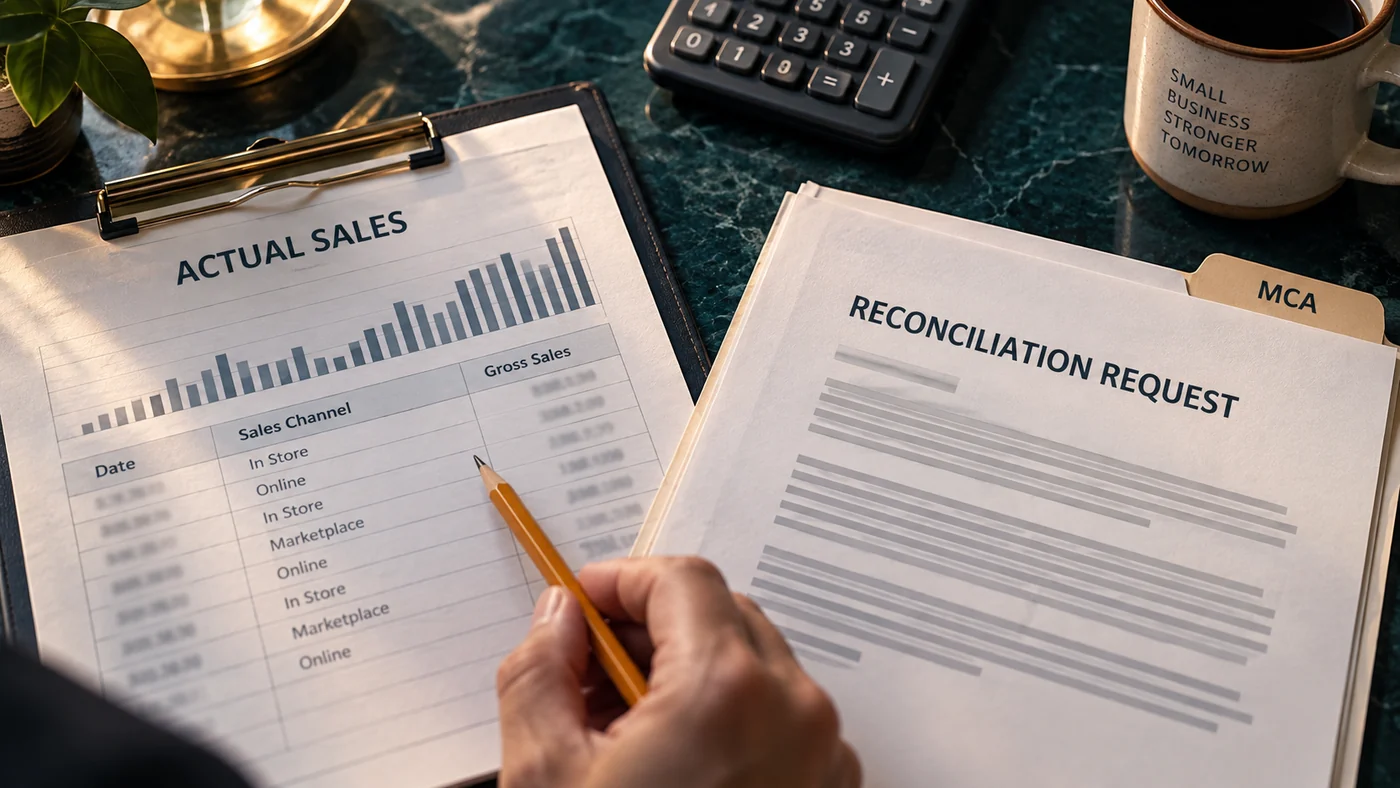
When business receipts fall but MCA withdrawals stay the same, the reconciliation clause deserves attention. Merchant cash advance reconciliation is the process described in an agreement for comparing remittances with actual receipts and determining whether an adjustment is required.
A mandatory reconciliation provision can create an important contractual right. To use it, identify the agreement’s calculation, notice requirements and supporting records. A request does not automatically produce a lower withdrawal, and a refusal should be evaluated against the actual agreement and applicable law.
What Is an MCA Reconciliation Clause?
An MCA agreement may describe the purchase of a stated amount of future receivables in exchange for funding delivered to the business. It may collect a purchased percentage of receipts directly or use fixed daily or weekly withdrawals as an estimate of that percentage.
A reconciliation provision may connect those estimated remittances to actual receipts. It may be called a reconciliation, readjustment, true-up or look-back provision. The heading alone does not tell you how it works.
Check whether the clause addresses past collections, future withdrawals or both. A look-back may compare what was collected during a defined period with the purchased percentage of qualifying receipts. A forward-looking adjustment may change the estimated amount collected going forward. The contract determines the available process.
Reconciliation does not necessarily reduce the total purchased amount. It is different from negotiating a settlement or agreeing to a new payment arrangement.
Read These Terms Before Making the Request
The Percentage and the Receipts It Applies To
Locate the purchased percentage and the definition of receipts or sales proceeds. Compare that definition with bank deposits and processor reports. Identify transfers, new financing, refunds and other entries separately so the calculation does not quietly treat every deposit as a sale.
The Review Period and Required Documents
Find the look-back period, how often a request may be made and any stated time limit. List the required statements, sales reports or other records. Include amendments that changed the percentage, estimated remittance or request process.
The Notice Method and the Funder’s Obligation
Identify the named recipient, email address, portal or other delivery method. Read whether adjustment is mandatory when stated conditions are met, whether the clause reserves discretion, and whether another provision limits the right. If the provisions conflict or make a request impractical, flag that for counsel. If the broker, servicer and contract holder are different companies, use our MCA broker vs. direct funder guide to identify their roles before directing the request.
Contract terms matter: where the agreement requires reconciliation after a qualifying request, the funder’s obligation should be assessed against that requirement. A business owner should not assume that all agreements use the same conditions or that an informal call satisfies the notice provision.
A Reconciliation Calculation: An Illustrative Example
Suppose an agreement provides $37,500 in funding for a $50,000 purchased amount. It specifies a purchased percentage of 15% and starts with estimated daily withdrawals of $368. For this example only, assume the contract compares collections with qualifying receipts over the same monthly look-back period.
- Qualifying receipts for the review period: $40,000.
- Purchased percentage: 15%.
- Percentage-based amount: $40,000 × 15% = $6,000.
- Actual collections: 20 withdrawals × $368 = $7,360.
- Difference to investigate: $7,360 − $6,000 = $1,360.
The $1,360 difference is the issue to raise with the supporting records. Whether it requires a refund, credit, revised withdrawal or another response depends on the agreement and governing law. This example does not establish that a particular business is owed that amount.
The original funding amount and total purchased amount do not, by themselves, supply the reconciliation formula. Use the percentage, receipts definition, dates and actual collections from your own documents.
Build a Documented Reconciliation Request
- Identify the agreement and clause. Include the business name, agreement date or reference number, and the provision you are asking the funder to apply.
- Define the period. State the exact dates under review and use the same period for receipts and collections.
- Attach the supporting records. Supply the documents required by the agreement and explain any entries that need clarification. Keep a copy of everything submitted.
- Show the calculation. Identify the percentage, qualifying receipts, actual withdrawals and any discrepancy. Explain whether the request concerns past collections, future remittances or both.
- Use the required delivery method. Save the dated email, portal receipt or other delivery evidence. Ask for a written response, the calculation used and the effective date of any adjustment.
If you have several MCAs, keep a separate request and withdrawal record for each agreement. An adjustment from one funder does not automatically change another funder’s terms.
A request does not itself suspend withdrawals, amend the agreement or extend a court deadline. Discuss urgent payment pressure, any proposed change to payment instructions, and any default notice with counsel. If a lawsuit is already pending, the reconciliation request and the court response need separate attention.
Does a Temporary Payment Cut Resolve the Reconciliation?
A funder may offer a reduced withdrawal for a limited period. That can provide immediate cash-flow relief, but the offer should explain how it relates to the contractual reconciliation request.
Before accepting, review whether the offer addresses past overcollections, changes only future withdrawals, adds fees, defers amounts for later collection or contains a release of claims. Confirm when the reduction starts and ends, and what payment amount resumes afterward.
Keep the written offer with the underlying calculation. A temporary concession may or may not satisfy what the agreement requires; the size of the payment cut alone does not answer that question.
If the Funder Refuses, Delays or Disputes Your Request
Keep a dated copy of the request, supporting revenue records and every response. Identify whether the funder says documents are missing, disputes the receipts calculation, relies on a particular clause, or has not responded.
Counsel can assess whether the request met the agreement’s requirements, whether the funder honored its obligations and what claims, defenses or negotiation options may be available. A refusal to provide a contractually required reconciliation can be significant. It does not, by itself, establish an unlawful loan or cancel the obligation.
Likewise, the presence of a reconciliation clause does not automatically establish that the entire transaction is lawful. Both the wording and the applicable legal standard require review.
Why Reconciliation Can Matter to Loan Classification
New York example: courts have considered reconciliation, whether the agreement has a finite term, and recourse upon bankruptcy when assessing whether repayment is absolute or contingent. The transaction is considered as a whole. See LG Funding (2020) and the later application of these factors in Kapitus Servicing (2026).
These New York decisions illustrate why a single clause or response does not settle every case. The governing jurisdiction, the agreement and the available evidence determine the analysis in a particular matter.
Review Your Reconciliation Rights With an MCA Attorney
Bring the signed agreement, amendments, recent bank and processor records, withdrawal history, your request and the funder’s response. Those materials let an MCA attorney compare the contractual right with the calculation and what happened after you requested it.
Contact Business Debt Law Group for a free consultation. All consultations are free. Any retained legal-service fees and scope are addressed separately in an engagement agreement.
This article provides general information, not legal advice for a particular agreement or dispute. The calculation is illustrative. Contractual rights, deadlines and remedies depend on the terms, facts and applicable law; no adjustment or outcome is guaranteed. Contacting the firm does not create an attorney-client relationship or pause withdrawals, enforcement or court deadlines.
Free MCA Review or Case Evaluation
Have questions about your MCA agreements, payment pressure, or court papers? You do not need a lawsuit to request a free review.
Consultations are free; retained legal-service fees are separate. Contacting the firm does not create an attorney-client relationship or extend a deadline. No outcome is guaranteed.