
Ironwood Finance Lawsuit or demand involving an older MCA?

An older Ironwood agreement may differ from the products advertised today. If your matter concerns an MCA or future-receivables purchase, start with the documents from when the business received its funding.
Free MCA review or case evaluation.
No lawsuit is required to ask for help.


The Ironwood file
In a 2017 deBanked interview, Ironwood Finance's owner discussed the company's merchant cash advance business. Its current website emphasizes real-estate financing and invoice factoring. The historical MCA evidence supports reviewing older agreements without describing every current Ironwood product as an MCA.
The distinction is practical: an agreement covering future business receipts needs a different factual review from a transaction tied to identified invoices or real property. Confirm the exact entity, date and transaction documents. Neither a familiar brand name nor the word receivables tells the full story.
Sources: Ironwood Finance: current product FAQs · deBanked: 2017 interview with Ironwood's owner
- Historical MCA evidence
- A June 2017 interview with Ironwood's owner describes merchant cash advances.
- Current website
- Emphasizes real-estate financing and invoice factoring; current marketing is not proof of an older agreement's terms.
- Distinct review issue
- Reconstructing the original transaction and separating future-receivables funding from identified-invoice financing.
- Independent legal representation
- Business Debt Law Group is not affiliated with, endorsed by, or acting for Ironwood Finance.
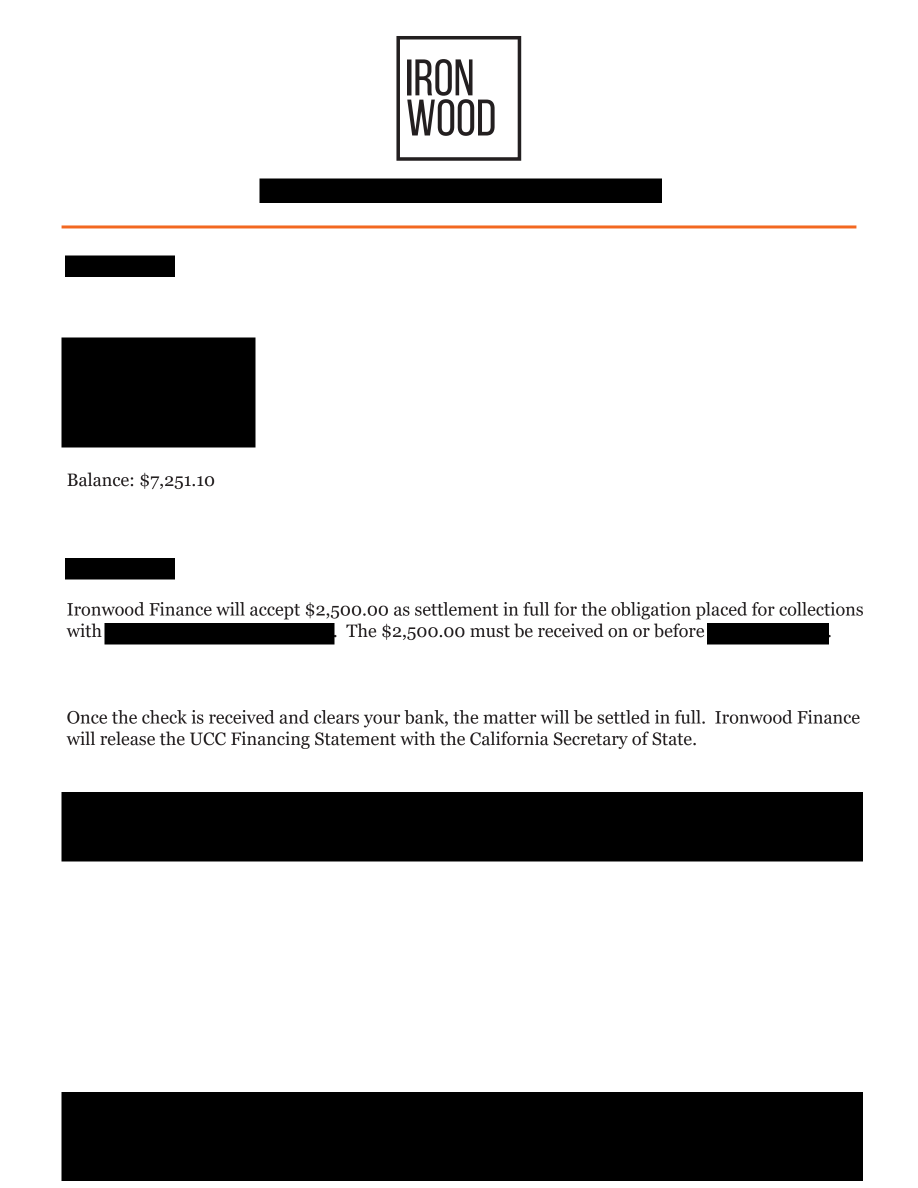
An Ironwood offer, not a complete case record
The published excerpt compares $7,251.10 with proposed terms of $2,500. It does not establish acceptance, payment completion or the product underlying this particular account. The example remains business financing rather than a confirmed MCA settlement.
See more documented settlement examples ↗
Partial, redacted excerpt from one matter. Other pages, amendments and later events may affect these terms. This discussion does not summarize the complete agreement or case. Acceptance, completed payment, releases and the final outcome require verification from the complete records. This is not a standard offer or promised result. Past results do not guarantee a similar outcome.
Use the agreement from the transaction—not today's marketing.
Create a short chronology: the original funding, any renewal or replacement agreement, payment adjustments, collection demands and later proposals. A later document may reference only one part of that history. Keep the earlier agreements so counsel can see what was replaced and what may remain disputed.
Look at what the transaction covered. Did the documents identify particular customer invoices, describe a percentage of future receipts, or create a different financing obligation? Keep invoice schedules and notices to customers where they exist. Those records help an attorney determine which terms and legal questions actually apply.
Then compare the proposed amount with the account ledger and the complete settlement language. Check whether an offer addresses all agreements, which parties would be released and what has to occur before a dismissal or other promised document is due. A one-page excerpt cannot answer those questions for an entire matter.
If an Ironwood Finance lawsuit or judgment is involved, preserve the entire court record available to you and disclose prior appearances or agreements. The age of the transaction or a change in the company's advertised products is not a reason to ignore current papers.
Where does your Ironwood matter stand?
MCA payments are too much
For an older MCA, assemble the original withdrawal terms and later adjustments before comparing today's demand with the payment history.
Receivables or accounts are affected
Preserve invoice schedules and customer notices. Identify the receivables and agreement each communication actually concerns.
Court papers have arrived
Bring all served papers and any older orders or stipulations. Counsel needs the procedural history as well as the original funding contract.
Four practical first steps.
- Check for a court deadline.If you received court papers, identify where the case is filed and when a response is due. Settlement discussions do not automatically extend a deadline.
- Put the records in one place.Collect the agreement, payment history, bank statements, and every notice. Preserve emails and texts, including any proposed settlement terms.
- Review a proposed change before signing.A new agreement, acknowledgment, release, or guarantee can affect your rights and obligations. Have its terms reviewed in context.
- Discuss a plan for your actual situation.Ask which legal or negotiation options fit the documents, cash flow, and litigation status—and what representation would cost.
Ironwood: questions about MCA matters.
Did Ironwood Finance provide merchant cash advances?
A 2017 firsthand interview with its owner describes an MCA business. The current website emphasizes other financing. That historical evidence does not classify every current product or every past account.
Does selling receivables always mean the agreement is an MCA?
No. Identified-invoice factoring and a purchase of future receipts can raise different questions. The actual documents and transaction facts should be reviewed before assigning a legal classification.
Can I assume the $2,500 proposal resolved that entire matter?
No. The excerpt records proposed terms only. The complete agreement, acceptance, payments, any amendments and later events would be needed to determine what was resolved.
What does the free MCA review cover?
The initial consultation can address your MCA agreement, payment pressure, collection communications or case status. Consultations are free. Any retained legal-service fees are separate and addressed in the engagement terms.
Let’s review the MCA issues affecting your business.
Tell us about the payment demand, proposed agreement or court papers you need help understanding.
General information, not legal advice. Options depend on the agreements, facts, applicable law, and procedural history. No result is guaranteed. Contacting the firm does not create an attorney-client relationship or extend a deadline. Business Debt Law Group provides legal services; it does not provide or arrange financing.