
Can You Vacate a Merchant Cash Advance Default Judgment?
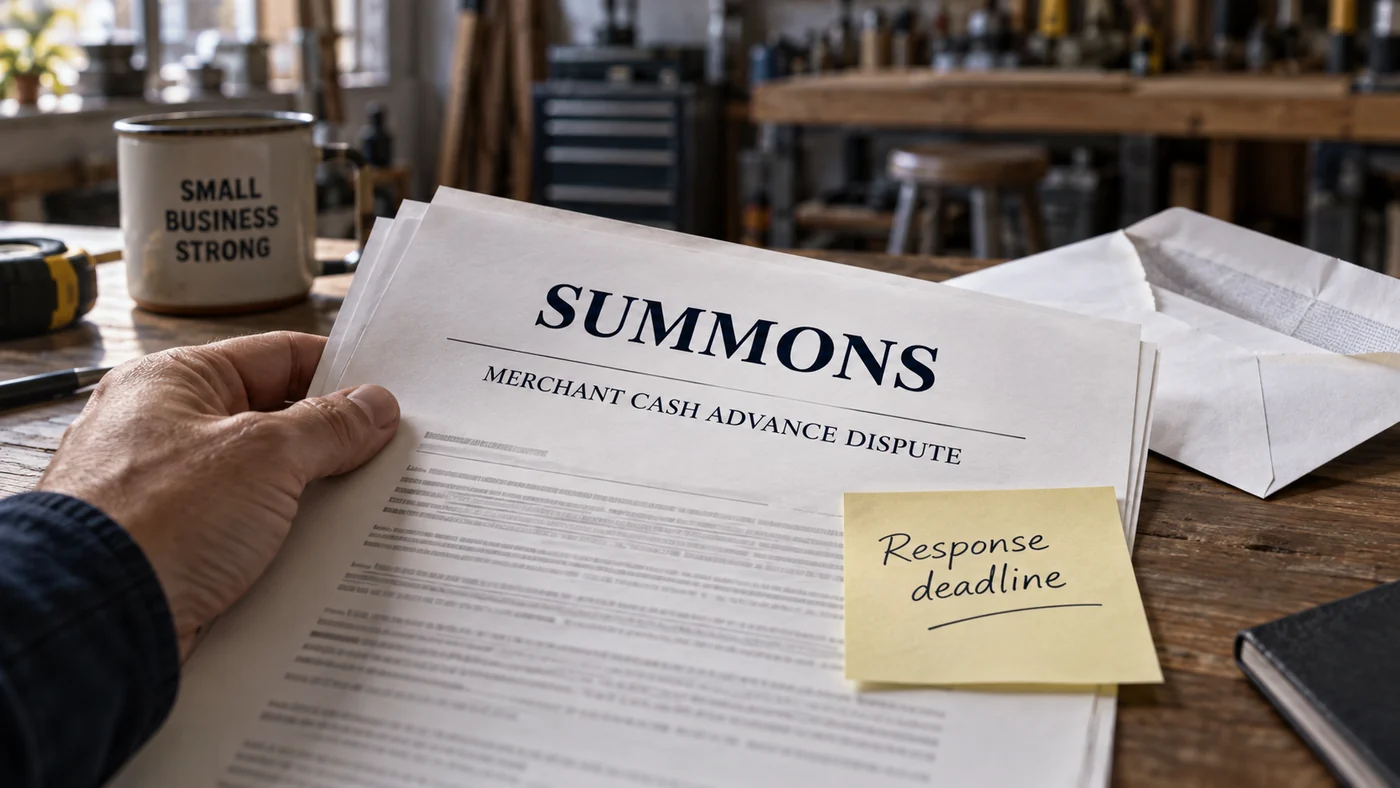
You may be able to vacate an MCA default judgment if there are valid legal grounds and you meet the applicable procedural requirements. The answer depends on the court, how the lawsuit was served, why the default occurred, the available defenses, and when you learned about the judgment.
A judgment does not mean you should assume nothing can be done. It does mean you need to act promptly. An attorney can review whether to challenge the judgment, seek relief from collection activity, negotiate a resolution, or pursue more than one of these options.
Vacating a judgment and eliminating the alleged debt are different things. A successful challenge may reopen the lawsuit and give the business an opportunity to defend it. It does not necessarily end the case. New York Courts’ explanation of vacating default judgments
Request a Free MCA Review or call 888.407.7460.
What Is an MCA Default Judgment?
A merchant cash advance default judgment is a court judgment entered after a defendant fails to respond or participate as required in a lawsuit involving an MCA agreement or related obligation.
Missing an MCA payment is not, by itself, a court judgment. A funder’s collection demand is not a judgment either. Obtain the actual court record before deciding what response is needed.
The judgment may name the business, an individual guarantor, or both. Each defendant’s service history, obligations, and potential grounds for relief should be reviewed separately.
If you have received a lawsuit but no judgment has been entered, start with our merchant cash advance lawsuit guide.
What Should You Do When You Discover the Judgment?
Gather the documents an attorney needs to evaluate the case:
- The judgment and court information: the court, case number, entry date, amount, and parties named.
- The lawsuit and service records: the summons, complaint, exhibits, and affidavits describing how each defendant was served.
- The MCA documents: agreements, guarantees, amendments, reconciliation requests, and payment records.
- Collection notices: bank restraints, levies, subpoenas, processor notices, and papers concerning enforcement in another state.
- A timeline: when you first learned about the lawsuit and judgment, what notices you received, and any communications about responding or settling.
Do not discard envelopes or assume an email is unimportant. Delivery methods and dates can affect the legal analysis.
Tell the attorney immediately if payroll funds are frozen, money is scheduled to be turned over, or a hearing or response deadline is approaching.
What Grounds Can Support a Request to Vacate an MCA Default Judgment?
Disagreeing with the balance or being unable to pay does not automatically justify setting aside a judgment. The challenge must fit a recognized legal ground and be supported by evidence.
The following New York examples illustrate issues an attorney may examine. Other state courts and federal courts have different rules.
Improper Service or Lack of Jurisdiction
An attorney can review whether the court had authority over each defendant and whether service complied with the applicable requirements.
For example, counsel may compare the process server’s affidavit with address records, business records, and evidence about who received the papers.
Not receiving papers personally does not automatically establish improper service. The law may permit other service methods. New York’s CPLR 5015(a)(4) provides a route to relief where the court lacked jurisdiction. CPLR 5015
An Excusable Default and a Potentially Meritorious Defense
Under New York’s excusable-default framework, a defendant generally must explain the failure to respond and show a potentially meritorious defense. A detailed, supported explanation matters; simply saying the papers were overlooked may not be enough. New York appellate decision discussing these requirements
In an MCA dispute, counsel may review payment credits, the claimed balance, reconciliation provisions, the nature of the transaction, guarantees, and the claimant’s asserted right to enforce the agreement. Identifying a possible issue does not establish that it will defeat the claim.
For relief under CPLR 5015(a)(1), the statute generally requires a motion within one year after service of the judgment with written notice of entry, with a separate rule where the moving party entered the judgment. Other grounds have different requirements. Do not calculate your deadline from a general article. CPLR 5015
Lack of Timely Actual Notice Under CPLR 317
CPLR 317 may provide another route for certain defendants served other than by personal delivery who did not appear, lacked actual notice of the summons in time to defend, and have a meritorious defense.
The statute sets a limit of one year after learning of entry of the judgment, and no more than five years after entry. Eligibility depends on the service method and the full circumstances—not merely a statement that the owner never saw the papers. CPLR 317
Other Recognized Grounds
Depending on the facts, counsel may also examine fraud, misrepresentation, misconduct, or qualifying newly discovered evidence. These grounds have their own requirements and should not be assumed from a disagreement with the funder. CPLR 5015
Will Asking to Vacate the Judgment Stop Collection?
Do not assume that filing a motion or beginning negotiations stops enforcement. Counsel should separately assess whether a stay, protective order, agreed pause, or other relief is needed.
In New York, courts have authority to grant appropriate stays and to limit or modify enforcement procedures. Whether relief is available, what it covers, and whether conditions apply depend on the case. CPLR 2201, CPLR 5240
If your bank account is frozen, obtain the bank’s notice and read our MCA frozen-bank-account guide.
Do not hide assets or redirect receipts to evade enforcement. Restraining notices can prohibit transfers, and violating them can have serious consequences. An attorney can review lawful options, including applicable exemptions, challenges to improper restraints, and requests for court-authorized relief. CPLR 5222
What Happens If the Judgment Is Vacated?
The court’s order determines what happens next. The business may regain the opportunity to answer the complaint, assert defenses, and participate in the lawsuit.
That can be an important step, but it is not necessarily a final victory. The funder may continue pursuing its claim, and the business may have new deadlines to meet. In some circumstances, a successful jurisdictional challenge may result in dismissal without prejudice, which does not necessarily prevent a new case.
Ask counsel to explain both the requested relief and the work that may follow if it is granted.
Is a Confession of Judgment Different?
Yes. A confession of judgment involves signed documents authorizing entry of judgment without the ordinary contested lawsuit process. It should not be treated as identical to a default judgment caused by a missed response.
New York changed its confession-of-judgment filing rules effective August 30, 2019. The amendment applies to judgments entered on affidavits filed on or after that date. The current statute considers residence when the affidavit was executed or when filed, and treats a business entity as residing in a county where it has a place of business. 2019 amendment, CPLR 3218
An attorney should review the signed affidavit, filing date, residence or business-location facts, and the appropriate procedure for challenging that particular judgment.
What If the Judgment Was Entered in Another State?
Have counsel review both the original judgment and any enforcement papers received elsewhere.
Do not assume an account or asset outside New York is beyond a New York court’s reach until a separate local case appears. Certain enforcement orders can reach out-of-state property where the necessary jurisdiction exists. The analysis depends on the parties, property, institutions involved, and applicable law. New York Court of Appeals decision
If the funder registers the judgment in your state, preserve that notice too. Counsel can assess available objections, local procedures, and whether relief must also be sought in the original court.
Can You Negotiate an MCA Settlement After Judgment?
A settlement may still be possible after judgment. Whether to negotiate, challenge the judgment, or pursue both depends on the evidence, collection activity, business finances, and legal options.
Any proposed agreement should address:
- The total payment obligation and credit for money already collected.
- Which businesses, guarantors, agreements, and judgments are covered.
- Whether enforcement will pause and when restraints will be released.
- How the judgment will be satisfied or otherwise resolved.
- Whether related UCC filings and customer or processor demands will be released.
- What happens if a payment is late or missed.
Do not assume a payment plan automatically vacates the judgment, releases a bank account, or terminates every UCC filing. Those issues need specific attention in the agreement.
Our MCA settlement results show examples from other matters. Past results do not guarantee a similar outcome.
Frequently Asked Questions
Can I Vacate an MCA Default Judgment If I Never Received the Lawsuit?
You may have grounds for relief, but the attorney must examine how service occurred and when you received actual notice. Valid service does not always require personally handing papers to the business owner.
Does Vacating the Judgment Mean I No Longer Owe the Money?
Not necessarily. Vacating the judgment may reopen the lawsuit and allow a defense. Whether the funder can recover must still be resolved through the case, an agreement, or other applicable relief.
How Long Do I Have to Challenge an MCA Default Judgment?
There is no single deadline for every case. The court, legal ground, service history, and notice dates matter. Get the file reviewed promptly instead of assuming you have a year.
Will Hiring an Attorney Immediately Unfreeze My Account?
Hiring an attorney does not itself release a restraint. A release may require an agreement, court order, or another legally effective step.
Can I Negotiate While Challenging the Judgment?
Counsel can assess whether both approaches are appropriate. Negotiations should not be treated as an extension of court deadlines or an automatic pause in collection.
Have an MCA Default Judgment Reviewed
Business Debt Law Group’s MCA attorneys can review the judgment, service records, agreements, payment history, and collection notices to evaluate potential grounds for relief and settlement options.
Tell us whether the judgment names your business, you personally, or both—and whether funds are currently restrained.
Request a Free MCA Review or call 888.407.7460.
This article provides general information, not legal advice for a particular matter. Available options depend on the facts, court, agreements, and applicable law. Contacting the firm does not establish an attorney-client relationship, extend a deadline, or stop enforcement. No outcome is guaranteed.