
MCA Debt Restructuring: Merchant Cash Advance Payment Options
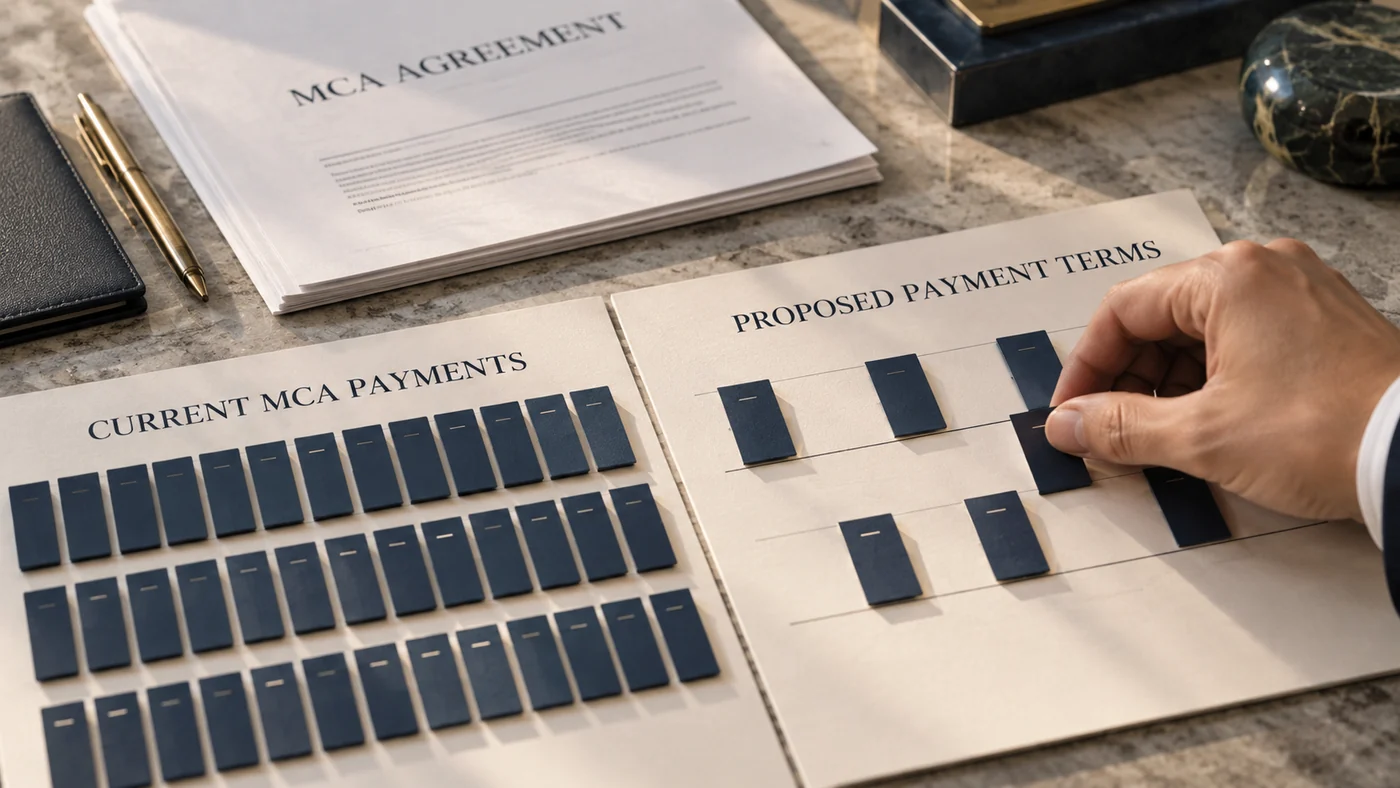
MCA debt restructuring involves reviewing and negotiating changes to an existing merchant cash advance payment arrangement. When payments no longer fit your business’s cash flow, compare proposed changes with any contractual reconciliation rights and the possibility of a negotiated settlement.
These options have different consequences, and availability depends on the circumstances. The starting point is to understand what your agreements require, what the business can sustain, and exactly which terms a proposed arrangement would change.
What Can Change in an MCA Debt Restructuring?
A proposed restructuring should identify the specific changes being requested. Depending on the agreement and any negotiations, the issues may include:
- Payment amount and frequency. A proposal may seek smaller withdrawals, a different payment schedule, or an adjustment tied to actual receivables.
- Timing and duration. Is the change temporary or ongoing? When does it begin, when is it reviewed, and what payments would follow any temporary reduction?
- The remaining obligation. Does the proposal change the total amount to be paid or only the schedule? What happens to fees, personal guarantees, security interests, and related MCA UCC filings?
A lower payment should not be treated as confirmation that the balance has been reduced or that a guarantor or lien has been released. Any proposed release should be addressed expressly in the documents.
Have the agreed changes recorded in a signed written modification or settlement agreement. Review the payment schedule, conditions, and consequences of a missed payment before relying on the arrangement. No particular modification or reduction is guaranteed.
Review Reconciliation Before Requesting New Terms
Gather each MCA agreement and amendment, recent bank statements, payment history, revenue records, and communications with the funder.
If payments are tied to a share of receivables, review the agreement’s reconciliation language and compare it with actual withdrawals. Questions to examine include how a request must be submitted, which records are required, what period is covered, and how the adjustment is calculated. Keep copies of requests, supporting documents, and responses.
Applying an existing reconciliation provision is different from negotiating a new payment arrangement. An attorney can assess what the contract provides and whether the payment history raises issues that need to be addressed. Our MCA reconciliation guide explains the issues to review.
Build a Proposal Around the Business’s Cash Flow
A revised payment needs to be considered alongside the business’s other obligations. Prepare a cash-flow picture that includes expected receipts, payroll, rent, taxes, supplier costs, and every MCA withdrawal. Identify seasonal changes and one-time receipts so a proposal does not depend on unusually strong revenue continuing.
When several MCAs are involved, review the agreements, guarantees, payment schedules, MCA UCC filings, and notices together. A reduction from one funder may provide little room if withdrawals under the other agreements remain unchanged.
Compare the proposed schedule with both current revenue and a lower-revenue scenario. Also identify any later increase or final lump-sum payment. The purpose is to understand whether the whole arrangement can be sustained, including after temporary relief ends.
How Restructuring Differs From Settlement and Consolidation
Changing payment terms and settling an obligation are different proposals. A settlement may seek to resolve an agreed obligation for a negotiated amount, subject to specified conditions. The documents should state what is being resolved, who is covered, when any release takes effect, and what happens if the settlement is not completed. See how MCA settlement works for more detail.
Consolidation generally involves new financing intended to pay existing advances. A reverse consolidation may instead provide funds over time while the original MCA payments continue.
Compare total repayment, fees, payment timing, guarantees, and collateral. Confirm which existing obligations would actually be paid off and how payoff and release would be documented. Business Debt Law Group does not arrange or provide consolidation loans. See our MCA consolidation comparison.
What if You Have Already Defaulted or Received a Lawsuit?
Payment discussions and a pending lawsuit need attention at the same time. If you receive court papers, a judgment, or an account restraint, seek prompt legal review. Do not assume that negotiating with the funder suspends a court deadline or stops collection activity.
Provide the attorney with the complete papers, when and how you received them, and any earlier agreements or communications. Include notices sent to your customers, payment processor, or bank. Different issues may require different responses; a payment proposal alone does not establish that a lawsuit, restraint, or disputed demand has been resolved.
For more information about responding to legal proceedings, see our MCA lawsuit guide.
Six Issues to Review Before an MCA Restructuring
Organize these items before discussing new payment terms with a funder or an attorney. They are not instructions to stop payments or take any specific action.
- Every MCA agreement. The signed agreement, schedules, addenda, amendments and funding or disclosure documents for each advance.
- Withdrawals vs. business records. Compare actual debits with bank statements and receipts to see what has really been collected.
- Default, guarantee and security terms. Locate default triggers, personal guarantees, security interests and any MCA UCC filings.
- Notices and deadlines. Keep every demand letter, default notice, customer notice and court paper, with the date received.
- What “restructuring” means. It changes terms on existing obligations. It’s different from settlement, a consolidation loan or a new advance.
- Possible responses. Review options with an attorney before signing new terms or changing bank accounts or processors.
What an Attorney Can Help You Review
An attorney can review the existing agreements and account records, evaluate potential legal issues, and discuss whether reconciliation, payment negotiations, settlement, or litigation may be relevant. If terms are proposed, that review should extend to the written documents and any unresolved guarantees, liens, claims, or court proceedings.
Before retaining counsel, confirm the scope of representation, fees, and whether any pending lawsuit is included. The work required depends on the circumstances. Documented examples appear on our settlement results page; past results do not guarantee a similar outcome.
Free MCA Review & Case Evaluation
Business Debt Law Group offers a complimentary initial review of MCA agreements and related account records. Share the agreements, recent payment information, and any legal notices so an attorney can discuss the issues affecting your business.
The scope depends on the documents and facts provided; no particular result is promised. This article provides general information, not legal advice. Submitting an inquiry does not create an attorney-client relationship.