
Closing Your Business With MCA Debt: What Happens Next?
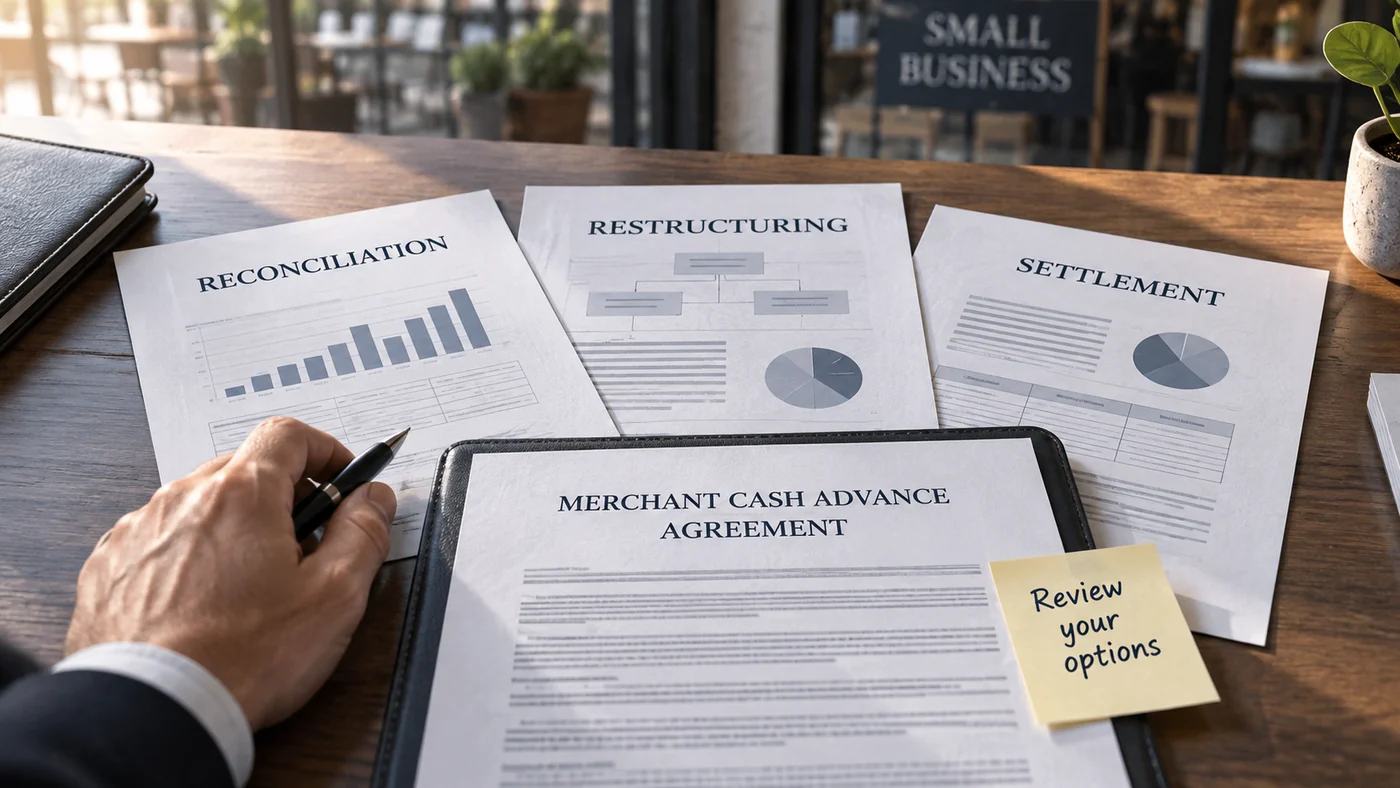
Closing your business does not automatically cancel an MCA agreement, release a personal guarantee, or resolve a UCC filing. What happens next depends on your documents, why the business closed, what remains of its receivables and assets, and applicable law.
If MCA payments have become unaffordable and you are considering shutting down, get advice before transferring assets, distributing money to owners, or signing new terms. If the business has already closed, gather the records and identify any outstanding court deadlines.
Business Debt Law Group’s MCA attorneys review MCA agreements, payment disputes, personal guarantees and related lawsuits.
Request a Free MCA Review or call 888.407.7460.
Does Closing a Business End Its MCA Obligations?
Closure alone does not answer whether an MCA funder has an enforceable claim against the business or an owner. An attorney needs to review both the agreement and what actually happened.
Many MCAs are written as purchases of future receivables. The review should address how the contract allocates the risk that revenue declines or the business fails, as well as what conduct it identifies as a breach. Reconciliation rights, the payment structure and recourse provisions can also affect whether a transaction is treated as a receivables purchase or a loan.
A genuine loss of business revenue and an allegation that someone diverted receipts raise different questions. Preserve the records showing why operations stopped, what revenue remained, and how money was handled. The label on the agreement does not establish the outcome.
Our guide to when an MCA may be treated as a loan explains that distinction.
Legal context: LG Funding v. United Senior Properties of Olathe discusses the contract-specific analysis under New York law; it does not establish that every MCA or business closure has the same result.
Stopping Operations and Dissolving the Company Are Different
A business can stop taking orders while its legal entity still exists. Dissolution is a separate legal process, and winding up can involve collecting receivables, addressing creditor claims, disposing of property and keeping records.
For example, Florida law allows a dissolved LLC to continue for winding up and requires it to discharge or make provision for its liabilities. It can also prosecute or defend proceedings. Other states and business structures have their own rules.
Filing dissolution paperwork is therefore not a substitute for resolving an MCA dispute. An attorney should review the requirements for the entity and state involved, together with any existing claim or lawsuit.
Example: Florida Statutes § 605.0709, winding up an LLC.
What Happens to the Personal Guarantee?
The company’s closure does not, by itself, release a guarantor. The important questions are what the person guaranteed, what triggers that obligation, and whether the funder can establish those conditions.
Have the complete guarantee reviewed alongside the MCA agreement. A document may address payment, specified conduct, representations, or performance of particular obligations. Its heading alone does not tell you the scope of liability.
Operating through an LLC and signing an individual guarantee are separate issues. For example, Florida’s LLC statute generally protects a member from liability based solely on being a member; that is not a conclusion about a separate promise the person signed.
Our MCA personal-assets guide explains why business obligations and potential personal exposure need separate review.
Sources: Florida Statutes § 605.0304; the LG Funding decision illustrates why the guarantee’s actual conditions matter.
What Happens to Receivables, Assets and UCC Filings?
Prepare separate lists of money owed to the business, funds held by processors or customers, and property the business owns or leases. Closing the doors does not explain who has rights to each item.
An existing security interest can continue in collateral after a sale or other transfer, subject to applicable exceptions, and can attach to identifiable proceeds. A UCC filing is a notice to investigate; the underlying agreement and applicable law determine the rights involved.
Before selling equipment, collecting and distributing final receivables, or transferring operations to another entity, have the ownership, collateral and release requirements reviewed. A buyer’s agreement to take over payments is not the same as a funder releasing the seller or guarantor.
Use our MCA UCC filing guide to understand the records to gather and the difference between a filing and other collection measures.
Legal framework: UCC § 9-315, collateral and proceeds. The applicable state enactment and exceptions must be checked.
What to Gather Before Closing—or Now, If You Already Closed
- The complete funding documents. Include every MCA agreement, guarantee, fee schedule, amendment, renewal and settlement proposal. Our MCA agreement guide explains the terms to identify.
- A record of what was funded and paid. Gather bank statements, processor statements, payment ledgers and any disputed balance calculations.
- The closure timeline. Record when revenue declined, why operations stopped, and what notices or reconciliation requests were sent.
- An asset and receivables list. Identify ownership, leases, security interests, outstanding invoices and any funds being held.
- Every demand and court document. Keep notices, service envelopes, complaints, judgments and bank or processor communications.
- The other obligations. Include taxes, wages, rent, secured debts and other MCAs so the review considers the whole business.
Do not move or conceal property to put it beyond creditors’ reach. Transfers can create additional disputes, including under fraudulent-transfer laws. An orderly closure needs a documented plan for the business’s property and obligations.
Example: Florida Statutes § 726.105 addresses certain transfers affecting creditors.
What If a Lawsuit or Judgment Already Exists?
Tell the attorney about court papers at the start of the review. Closing the business does not by itself dismiss a lawsuit, satisfy a judgment, or extend a response deadline.
The business and an individual guarantor may be named separately. Review who must respond, the court involved, how service occurred, and whether any restraint or enforcement step is pending.
See our MCA lawsuit guide. If a default judgment has already been entered, read what attorneys review when considering a challenge to an MCA default judgment.
Can an MCA Be Settled After the Business Closes?
A negotiated resolution may still be possible, but there is no standard discount or guaranteed outcome. The agreements, available defenses, payment history, remaining resources and status of any lawsuit all matter.
A proposed settlement should address the business and any guarantor, the specific obligations being resolved, payment conditions, and what happens to liens, notices, lawsuits or judgments. A statement that an account is closed is not a substitute for understanding the written release.
Read about MCA debt settlement and settlement agreement terms to review before signing.
Is Closing the Business the Same as Bankruptcy?
No. Bankruptcy is a separate court process. Whether it is appropriate depends on the entity, the owner’s exposure, the assets, the other debts and the available alternatives.
A company’s bankruptcy should not be assumed to resolve an owner’s separate guarantee. The U.S. Courts also explains that corporations and partnerships do not receive a Chapter 7 discharge. An attorney should evaluate the business and owner separately before recommending a filing.
Reference: U.S. Courts, Chapter 7 Bankruptcy Basics.
Questions About Closing With MCA Debt
Can the funder pursue me if the business has no money?
A business having no money does not settle whether a claim exists against an owner. The guarantee, alleged breach, entity structure and applicable defenses need review.
Does closing the business remove the UCC filing?
No—not automatically. Review the underlying rights and whether a termination or other filing is required. Address the release process expressly in any settlement.
See, for example, New York UCC § 9-513, termination statements, and our MCA UCC guide.
Should I wait until the business closes to request a review?
You can request a review while the business is still operating. Bring the agreements, cash-flow records and any proposed closure or sale plan. If it has already closed, bring the closure records and any outstanding demands.
Request a Free MCA Review
If your business is closing—or has already closed—with unresolved MCA obligations, Business Debt Law Group can review the agreements, payment history, guarantees and any court papers to evaluate potential legal and negotiated options.
Request My Free MCA Review
Or call 888.407.7460.
General information, not legal advice for a particular matter. Outcomes depend on the documents, facts and applicable law. No outcome is guaranteed. Contacting the firm does not create an attorney-client relationship or extend a court deadline.